
You Have Eight Senses. Your Child Is Using All of Them.

"She screams every time we use the hand dryer. Every single time. Is that normal?"
Parents ask me some version of this all the time, usually half laughing and half worn out. My answer: their child's brain is doing its job. It's getting more of that sound than the rest of us.
October is also Sensory Awareness Month, and I want to start with the senses nobody taught us in kindergarten. Most of us learned five. Your child's nervous system runs on eight, and the three we skipped explain a lot of what people call "behavior problems."
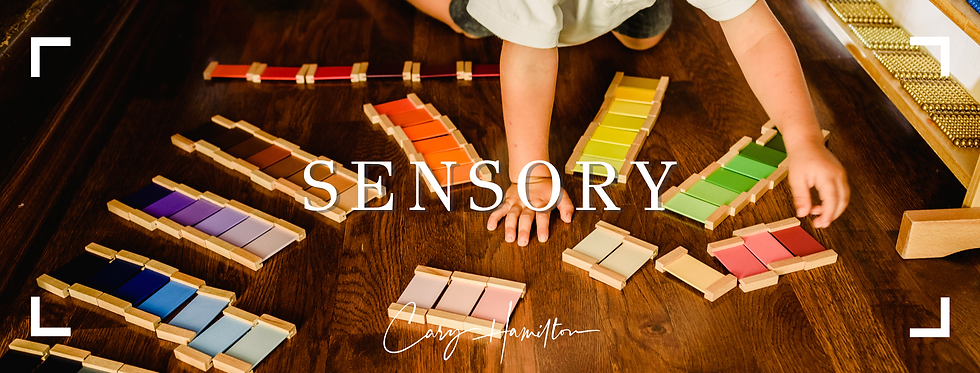
The three senses nobody taught you
Sight, hearing, touch, taste, and smell are the ones you know. Here are the rest.
Vestibular. Your inner ear tracks movement, balance, and where your head is in space. It's the sense behind the kid who spins for twenty minutes without getting dizzy, and the kid who panics when their feet leave the ground.
Proprioception. Your muscles and joints tell your brain where your body is and how much force you're using. It's why some kids crash into everything, hug too hard, or press the pencil through the paper.
Interoception. Signals from inside the body: hunger, thirst, needing the bathroom, a racing heart, a tight stomach. Emotions start as body sensations, so interoception is also how we recognize our feelings.
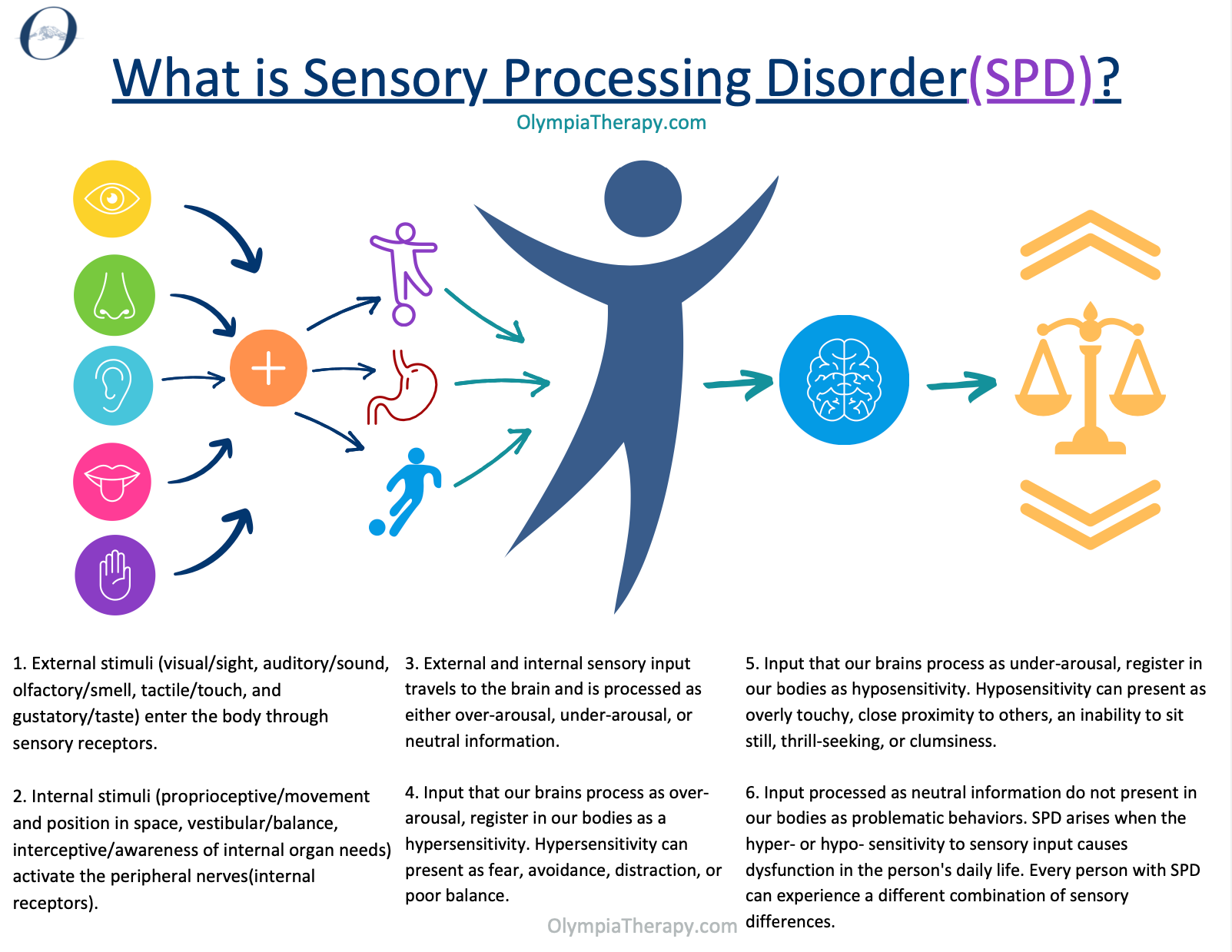
Sensory processing is how the brain takes in all of that information, organizes it, and decides what to do with it. Everyone has a sensory profile. You probably know yours. Maybe you cut the tags out of every shirt, can't think without music on, or chew on bottle caps.
A sensory difference becomes a disorder when it is chronic and interferes with daily life: play, learning, friendships, eating, sleeping, getting dressed. Research estimates that 5 to 16 percent of children have sensory challenges at this level.
Yes, it shows up on brain scans
Sensory processing disorder still isn't a standalone diagnosis in the DSM, and I hear "it isn't real" more often than I'd like, sometimes from other professionals. And it makes me incredibly frustrated because I see the impact every hour of the day.
The imaging says otherwise. Researchers at UC San Francisco used diffusion tensor imaging to look at the brain's white matter, the wiring that connects different regions. Children with SPD had measurably different connectivity, and those differences predicted their performance on direct tests of hearing and touch processing. The children fell on a continuum, with SPD at one end and sensory-typical at the other.
So the child screaming at the hand dryer is responding to what their brain receives. Their brain receives it differently, and for those screaming, it is pain they are feeling.
Too loud, too quiet, never enough
Sensory differences run in more than one direction. Some children are over-responsive, and the world arrives too loud, too bright, too scratchy. Some are under-responsive, and miss signals the rest of us notice, like a scraped knee or a full bladder. Some are seekers who go looking for more input by jumping, crashing, chewing, and spinning.
Many kids are a mix. I have met children who can't tolerate a sock seam and also climb the refrigerator.
When my son was little, he threw himself into the furniture. He sat upside down on the couch more often than right side up. At first we thought it was silliness or hyperactivity. It turned out his vestibular and proprioceptive needs were so high that he threw his body into things to get them met, including falling on his head, over and over. He wasn't being wild. His body was asking for input the only way it knew how.
You cannot REASON with a brainstem
Through the lens of the Neurosequential Model of Therapeutics, sensory processing sits low in the brain, in regions that come online early and run fast. Reasoning sits at the top and comes online last. When the lower brain is overwhelmed, the top floor goes dark.
That's why a lecture during a meltdown goes nowhere, and why a weighted lap pad or a quiet corner can do what twenty minutes of talking won't.
Interoception deserves its own paragraph. A child who doesn't feel hunger building goes from fine to furious in ninety seconds. A child who doesn't register their own racing heart has no way to tell you they're scared. Sometimes the work isn't teaching feelings words at all. It's teaching a child to notice their body first.
Be a Sensory Detective
Before you try to change anything, get curious. When a hard moment happens, write down what came right before it and look for the pattern:
What did your child hear, see, smell, or feel on their skin?
Were they hungry, tired, or holding it together after a long day?
Was there a transition, a crowd, or a change in plans?
Does it happen in one place, or at school and at home both?
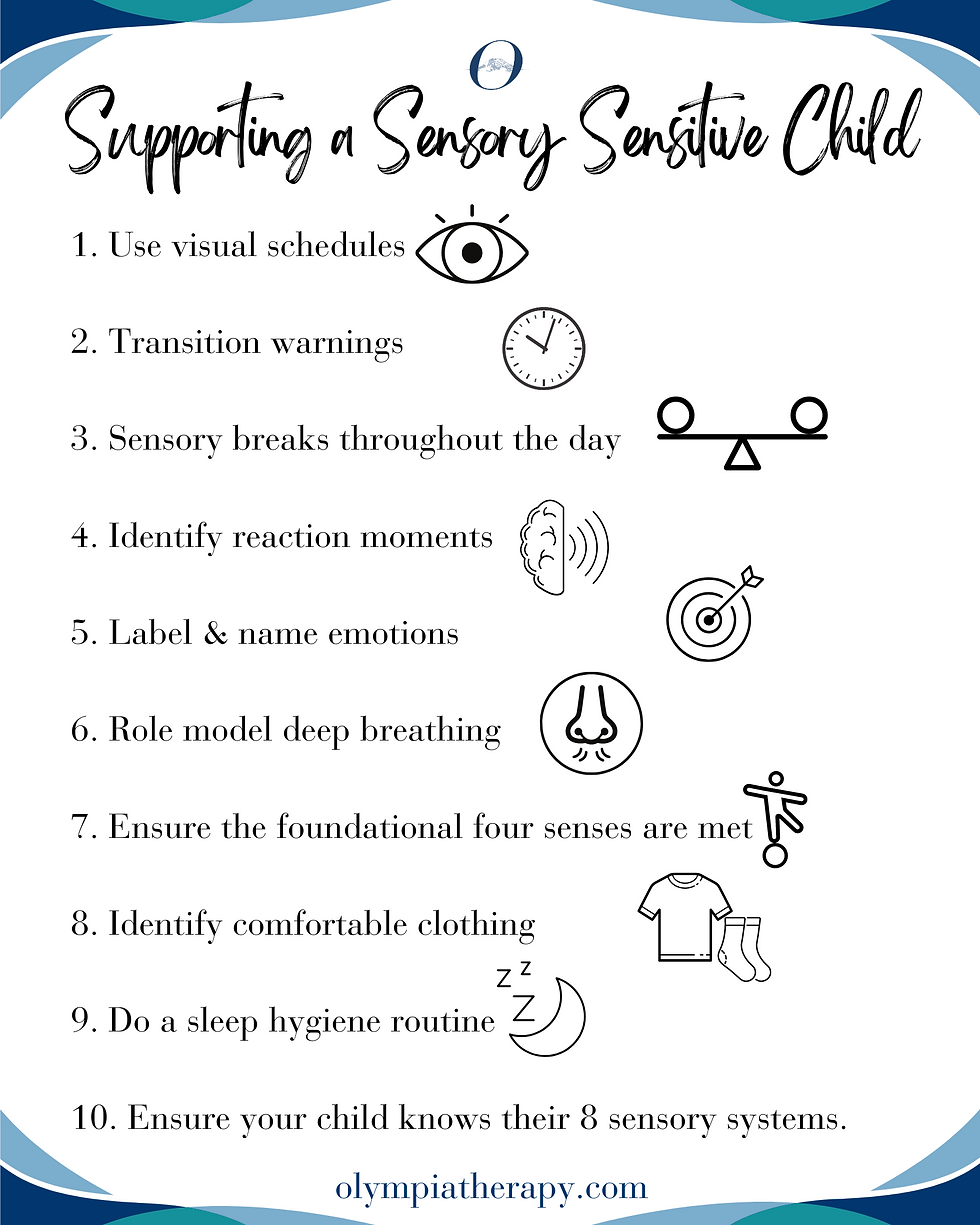
A week of notes usually tells you more than any checklist. Then you can build supports that fit:
Start with regulation. Offer regulating input first: squeezes, dim lights, humming, a quiet spot.
Build a sensory menu with your child. Include things that calm and things that wake the body up, like jumping, cold water, or crunchy snacks. Let them choose.
Move before demands. Heavy work, like carrying groceries, wall pushes, or wheelbarrow walks, before homework organizes the body.
Consider an occupational therapy evaluation when sensory differences are getting in the way of daily life.
A sensitive system gives a child more information than they can handle yet. The child who hears the refrigerator hum also hears the worry in your voice. Our job is to help them build the capacity to use what they notice.
Your child isn't overreacting to the world. They are receiving more of it. What is your child's body trying to tell you this week?

Bring Sensory Play Therapy training to your team. Email info@olympiatherapy.com. To schedule services, visit olympiatherapy.com.
Sources: UCSF (2016), Brain's wiring connected to sensory processing disorder: ucsf.edu; UCSF (2014), Kids with autism and sensory processing disorders show brain wiring differences: ucsf.edu; STAR Institute, Sensory Awareness Month: sensoryhealth.org


Comments